

Nearly every IPTV vs cable Maryland comparison online ranks the two by monthly cost. That answers a budgeting question, not a technical one, and it leaves out the part that determines whether you are satisfied six months later: what each arrangement depends on, and who can investigate it when the picture stops.
This page compares delivery, equipment, and troubleshooting responsibility rather than pricing.
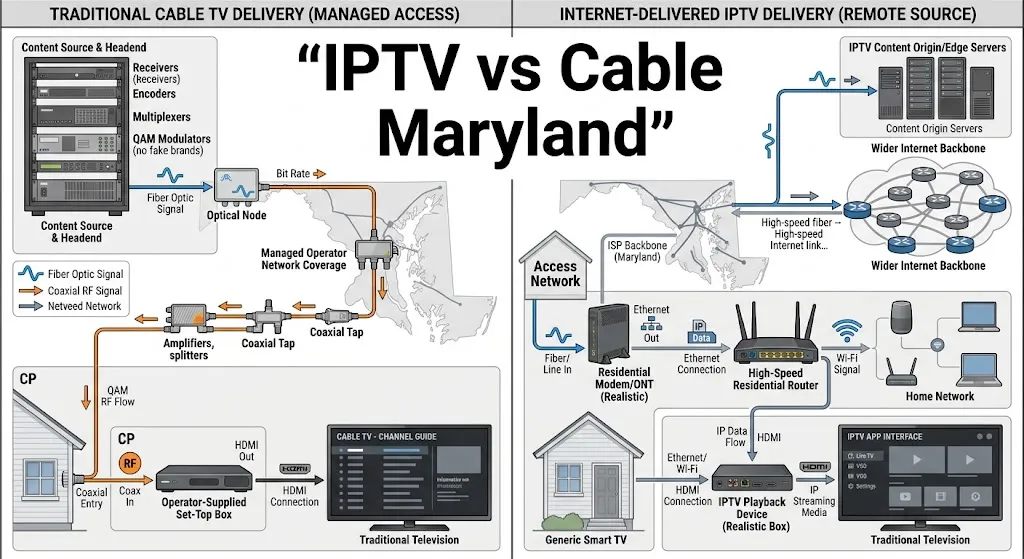
IPTV vs cable Maryland is not a contest between two products. A cable operator controls the television service, its access network, and the equipment it supplies. IPTV describes television delivered using internet protocol networking, which can mean equipment from your internet company or a service unrelated to it.
The useful comparison is how much of the delivery chain sits with one company and how much sits with you.
One distinction to settle first
IPTV describes television delivered using IP networking. That is a method, not a specific service, and the important question is always what network and what service sit behind the delivery.
The two categories are not cleanly opposed, and Verizon’s own equipment documentation shows why. Its VMS1100 is described as a hybrid QAM/IP video media server: the box tunes and decodes traditional QAM channels, then passes that video through the home network to smaller client boxes as IP streams. One device, both methods, inside a single household.
So “cable” and “IPTV” are not opposite ends of a line. The four separate meanings the term carries in this state are worth understanding before comparing anything.
Everything below compares traditional cable television delivery against television delivered over an ordinary internet connection, because that is the comparison most Maryland households are actually weighing.
IPTV vs Cable Maryland: What Changes in Practice
How traditional cable delivers television
A cable operator runs its own access network into the home and reserves capacity on it for television. Channels arrive continuously whether or not anyone is watching, and the set-top box tunes to whichever one you select.
The cable operator controls the television service, its access network, and the equipment it supplies. That level of control is the important distinction here, because it places responsibility for most of the delivery chain with one company.
How internet-delivered IPTV works
Television delivered over an internet connection uses the same connection as everything else in the house. Nothing arrives until a device requests it. Select a channel, the device asks a server, the server sends that stream.
If the service belongs to your internet company, part of that path is still managed by a single organization. If it belongs to a third party, the source sits entirely outside the control of anyone supplying your line.
What each setup depends on
Cable television depends on the operator’s access network and equipment working.
Internet-delivered television depends on a longer chain: the source sending the stream, the wider internet carrying it, your connection receiving it, your home network distributing it, your device decoding it, and the application playing it. Each link is a real dependency and a real point of failure.
Neither chain is inherently better. A longer chain trades a degree of managed reliability for flexibility, and whether that is a good trade depends entirely on what you value.
What Cable TV Does Well — and Where It Has Limits
Managed delivery
Because the operator manages the television service over its own access network, cable is largely insulated from what else is happening on your home network. A busy evening on your Wi-Fi does not affect it.
That predictability is the strongest argument for staying, and it is rarely mentioned in comparisons focused on price.
Operator-supplied equipment
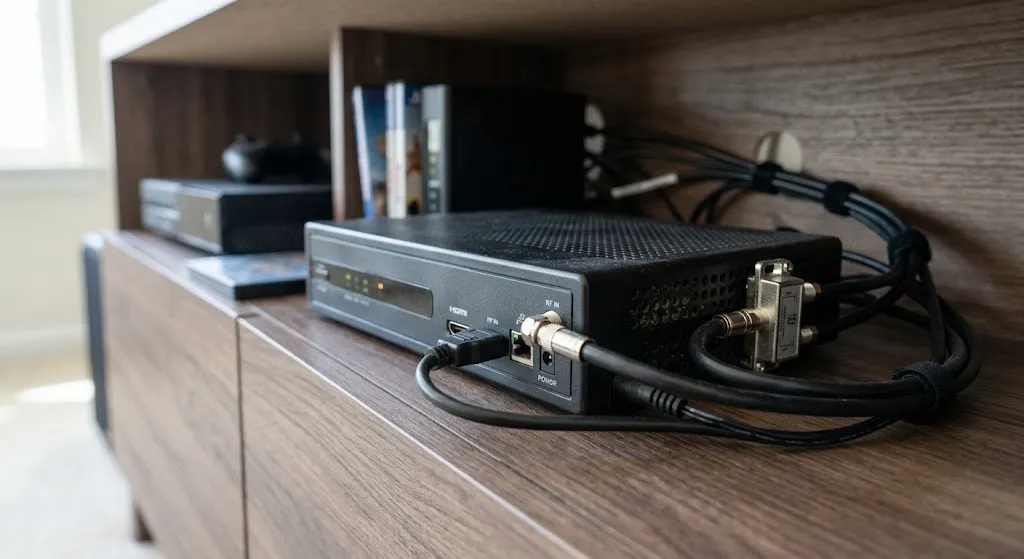
The set-top box is not yours. It is provisioned, updated, and eventually replaced by the operator. You do not maintain it — and you also cannot choose it, replace it with something better, or keep it if you leave.
Disadvantages of cable TV Maryland households notice
Three limits come up consistently.
Television is bundled: capacity is reserved for channels you never watch, and the packaging is decided by the operator rather than assembled by you.
Service is tied to the access network. Cable television works where that operator’s infrastructure runs and nowhere else, and it does not travel with you.
And the equipment chain is fixed. Adding a room usually means adding hardware from the operator, on the operator’s terms.
What Changes With IPTV
The internet connection becomes part of the delivery chain
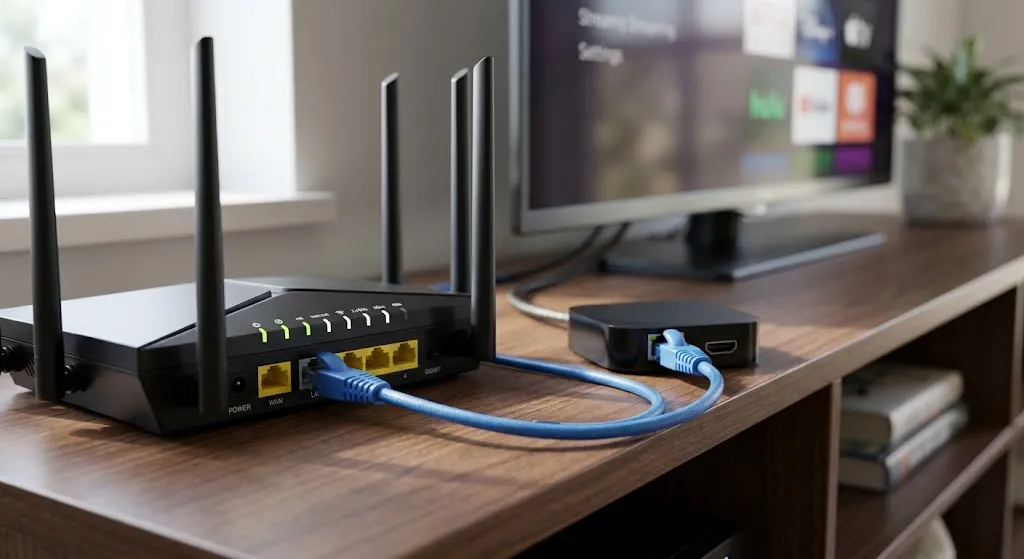
This is the largest change, and the one most people underestimate. Your connection stops being the thing that loads web pages and becomes the thing your television depends on.
FCC measurement data illustrates why that matters. In the Commission’s Thirteenth Measuring Broadband America report, based on measurements taken in late 2022, idle latency ranged from 13 to 22 milliseconds on cable services and 8 to 14 milliseconds on fiber — a small gap. But the same report notes that latency measured while the connection is carrying downstream traffic is generally significantly higher than idle latency.
A connection that tests well while idle is not the same connection while the household is using it. That distinction has no bearing on cable television and everything to do with internet-delivered television.
Advantages of IPTV Maryland viewers gain
Delivery stops being tied to one box in one room. Verizon, for instance, lists its Fios TV Home app as available on Apple TV and Amazon Fire TV devices, so even an operator’s own television can reach hardware the operator did not supply.
That choice is genuine flexibility. It is also genuine responsibility.
More points that can affect playback
A longer chain has more places to go wrong. Your router, your Wi-Fi coverage, the device, the application, and the source are all now part of the picture, and any one of them can degrade the experience while the others work perfectly.
This is not an argument against internet-delivered television. It is an argument for understanding the chain before depending on it.
Where IPTV and Cable Fail Differently
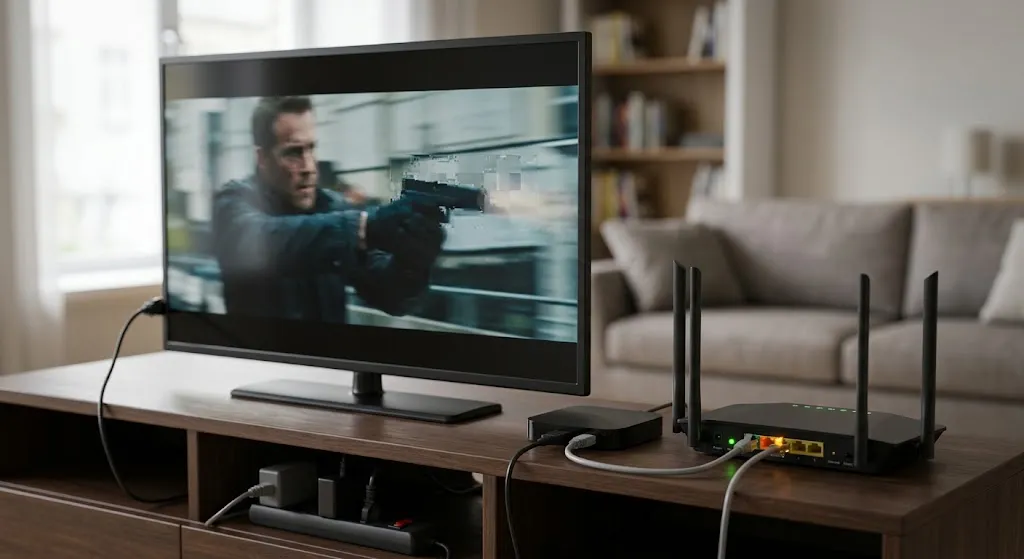
The most useful difference is not how often something goes wrong — it is where in the chain the cause is likely to sit.
| What you see | Cable: likely part of the chain | Internet-delivered: likely part of the chain |
|---|---|---|
| Nothing at all | Access network or a service outage | Connection down, or source unreachable |
| One channel missing | A lineup change on the service | A source-side change |
| Picture breaking up | A line or signal fault | Connection under load, home network, or source |
| Guide wrong or blank | The operator’s guide feed | A separate guide source, or a time-offset error |
| Fine on one device, not another | Rare — supplied boxes are identical | A device or application difference |
With cable, the operator controls more of the delivery chain, so many service-side faults can be investigated by the operator. With internet-delivered television, more of the chain sits outside any single company’s control, so the viewer often has more to isolate first.
If you prefer reporting a problem and waiting, that difference matters more than any feature comparison.
What This Means for Maryland Viewers
Cable-based broadband connections can share capacity within the access network, so performance is shaped by how that network is engineered and by traffic conditions at the time. Upload capacity is also often lower than download capacity on cable services. Fiber connections generally show lower latency in FCC measurements, though the gap between the two is small.
None of that determines whether internet-delivered television works well in a given home. The more useful distinction for television specifically is the one above: cable television is delivered through the operator’s managed network rather than depending on the ordinary public internet path.
The connection is not the television service
Worth stating plainly, because it is the most common confusion here: buying internet from a company does not mean buying television from that company, and a third-party subscription has no relationship to your internet company beyond using the line.
Which service you use, and whether it is authorized, are separate questions with their own legal dimension — ones this site covers elsewhere rather than here. This site does not name, rank, or recommend any subscription service, for reasons set out in our DMCA disclaimer and copyright policy.
The honest summary
Cable trades flexibility for predictability. You get a managed service, equipment someone else maintains, and a single company responsible for most of the chain — and you give up choice over hardware, packaging, and where television can travel.
Internet-delivered television reverses that trade. You gain choice and portability, and you take on a longer chain with more places to go wrong and more of the diagnosis falling to you.
In the IPTV vs cable Maryland decision, neither is the right answer for everyone. If you want television that works without your involvement, the managed path still does that better. If you want control and are willing to own the troubleshooting, the longer chain is a fair trade. Understanding what the term IPTV actually covers is the useful first step either way.
Every claim on this page is checked against a primary source before publication — how that works is set out in full. If something here is wrong, telling us is the fastest way to get it corrected.
Sources
- Verizon — VMS1100 Hybrid QAM/IP Video Media Server — Installation and Operation Manual — https://www.verizon.com/supportresources/content/dam/verizon/support/consumer/documents/vms1100_install_ops_manual-s.pdf (accessed September 2026)
- Verizon — Fios TV Packages — https://www.verizon.com/home/fios-tv/ (accessed September 2026)
- Federal Communications Commission — Measuring Fixed Broadband — Thirteenth Report — https://www.fcc.gov/reports-research/reports/measuring-broadband-america/measuring-fixed-broadband-thirteenth-report (accessed September 2026)
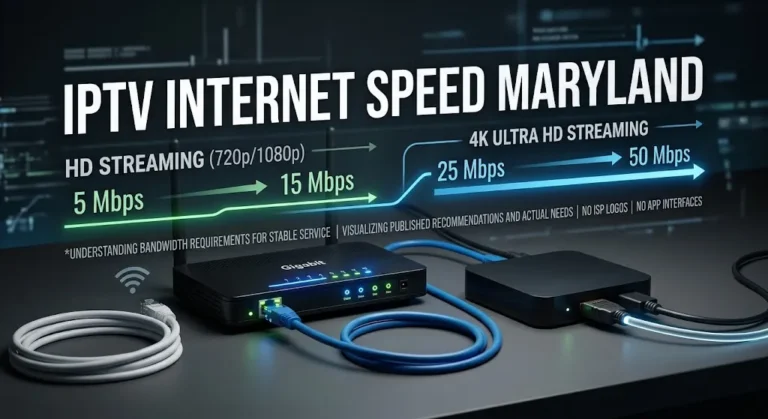
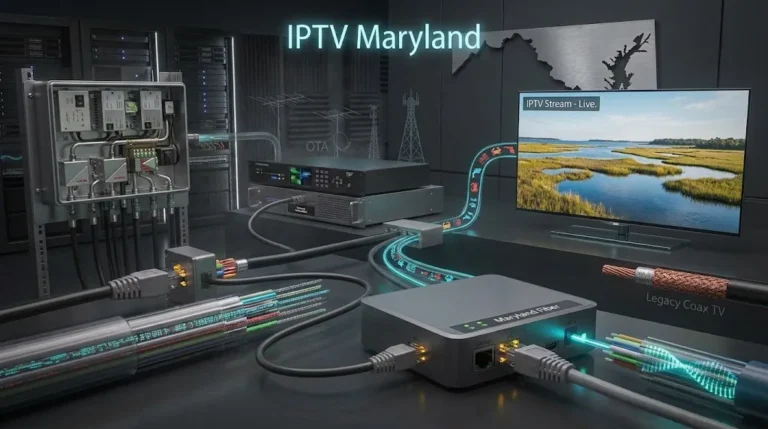


[…] IPTV and cable in Maryland […]