
Is IPTV legal? For viewers in Maryland and elsewhere in the United States, the honest answer depends on which part of IPTV the question is about. The technology, the player app, the device and the service it connects to are four different things, and the law treats them differently.
This page separates them, sets out what the federal law on unauthorized streaming actually says, and explains what can and cannot be concluded about a given service. It is general information about how the law is structured, not legal advice; for your own situation, speak with an attorney. For how IPTV works in the first place, see how IPTV works in Maryland.
Is IPTV legal? The technology is simply a way of delivering television over internet protocols, and player apps and devices are, in themselves, software and hardware. The legal questions center on the service: whether it has the rights to what it streams. A 2020 federal law makes running certain unauthorized commercial streaming services a felony. That law was not designed to penalize ordinary viewers, but it does not make unlicensed services lawful. This is not legal advice.
Is IPTV Legal? It Depends Which Layer You Mean
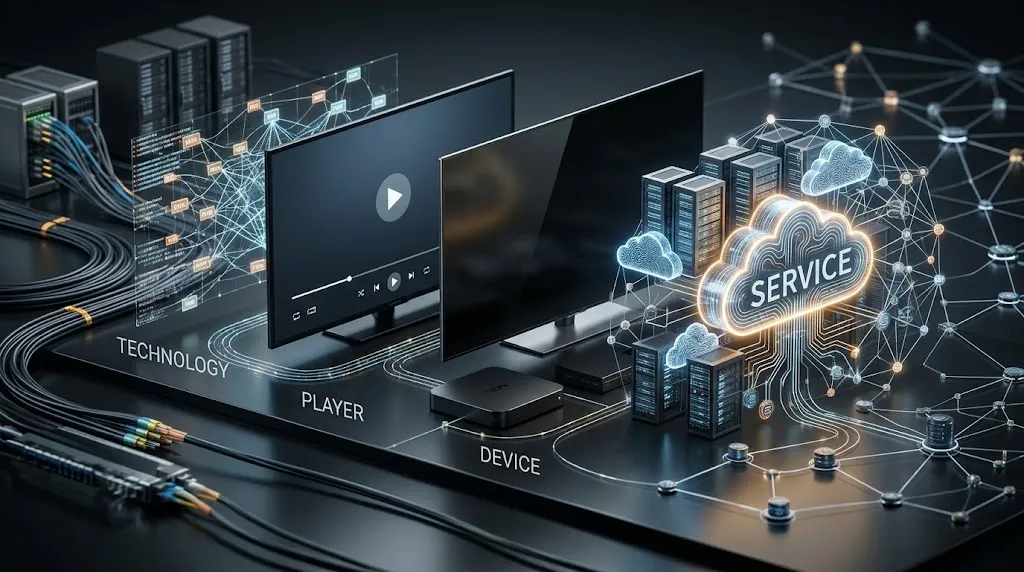
Most confusion about IPTV legality comes from treating it as one thing. It is at least four.
The Technology
IPTV means delivering television over internet protocols. Licensed services use internet delivery every day, including the TV apps of Maryland’s internet companies. The delivery method itself is not what the law is concerned with.
The Player App
A player app is software that plays a source the viewer adds. The developers of widely used players say so in their own listings: TiviMate’s Google Play listing, for example, describes it as a media player that provides no content and states that it does not endorse the use of illegal content sources. Our guide to IPTV apps sets out what other developers state. A player’s legal character is separate from whatever a user chooses to play in it.
The Device
The same applies to hardware. A streaming stick, a smart TV or a set-top box is a device; the court cases involving devices have concerned sellers who loaded them with software and promoted them for unauthorized content, as our guide to IPTV devices describes. In one of those cases, a court required a seller to remove the software while allowing the devices themselves to be sold.
The Service
The service layer is where licensing and unauthorized-distribution issues become central. A service either holds the rights to the channels and programs it streams, through its own content or through licenses from rights holders, or it does not. That question is what the federal law discussed below is built around.
What U.S. Law Says About Unlicensed Streaming
As legal commentary at the time explained, before 2020 unauthorized reproduction and distribution could be charged as a felony, while unauthorized streaming generally could only be charged as a misdemeanor. A specific statute changed that.
The Protecting Lawful Streaming Act of 2020
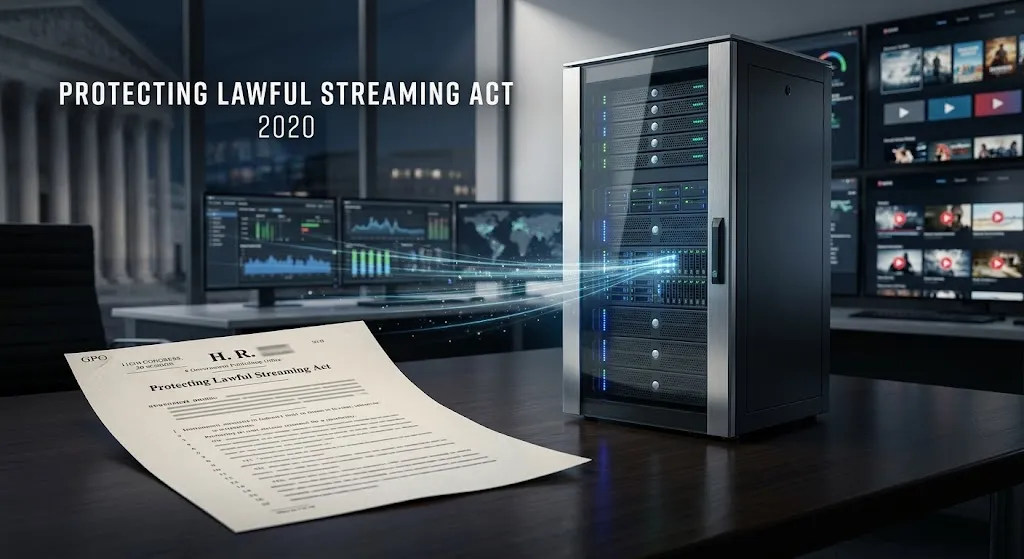
The Protecting Lawful Streaming Act, enacted in December 2020 as part of a larger appropriations law, added section 2319C to Title 18 of the U.S. Code under the heading “Illicit digital transmission services.” It makes it unlawful to willfully, and for commercial advantage or private financial gain, offer or provide to the public a digital transmission service, which the law defines as a service whose primary purpose is publicly performing works by digital transmission, when that service meets one of three conditions:
- it is primarily designed or provided for publicly performing copyrighted works without the authority of the copyright owner or the law;
- it has no commercially significant purpose or use other than doing so; or
- it is intentionally marketed or directed to promote its use for doing so.
The statute sets prison terms that increase for certain categories of works and for repeat offenses. The U.S. Copyright Office also publishes the text of the law.
Who the Law Is Aimed At
The Protecting Lawful Streaming Act targets commercial streaming services that knowingly provide unauthorized access; it was not designed as a general criminal penalty for ordinary viewers. Statements entered into the Congressional Record when the law passed describe it as aimed at large-scale commercial infringement, and its sponsor, Senator Thom Tillis, said at the time, as quoted in legal commentary, that it would not apply to internet users.
That does not mean every use of an unauthorized IPTV service is lawful. Individual circumstances can raise separate copyright or other legal questions, so this article is not legal advice.
What Enforcement Has Looked Like
The clearest recent U.S. example involves the operators of a service, not its customers. In 2024, the Justice Department announced that a federal jury had convicted five men who ran Jetflicks, a subscription streaming service that, according to the department, used scripts to gather pirated television episodes and host them for paying subscribers. In July 2025, the department reported that the five had been sentenced to terms of up to 84 months in prison.
Civil cases have followed the same pattern. Light Reading reported that TickBox, accused of selling devices loaded for unauthorized streaming, agreed to pay $25 million to settle a lawsuit brought by an industry anti-piracy coalition, and that a settlement in the Dragon Box case included a $14.5 million judgment. In each case, the defendants were the people running or selling the service, not individual viewers, and none of these cases is a guide to what would happen in any other.
Can You Get in Trouble for Using IPTV?
Some version of this question appears in nearly every set of search questions about IPTV, and it does not have a one-word answer.
Watching a licensed service, such as an internet company’s TV service, within its terms is the ordinary case, and not what this discussion is about. For unlicensed services, the picture is more specific. The 2020 federal law described above targets a particular kind of commercial service that meets its requirements, and there is no basis for saying that simply watching a stream makes every viewer guilty of that particular offense.
At the same time, that does not turn an unlicensed service into a lawful one. Other copyright questions, a service’s or platform’s terms, and other laws can still be relevant.
What can be said with confidence is where enforcement has concentrated: on services, sellers and the infrastructure around them. Rights holders have had apps removed from app stores, and, according to AFTVnews’s report of Amazon’s statement, Amazon blocks apps identified as providing access to pirated content on Fire TV devices. None of that is a guarantee about any individual’s position, and this page cannot offer one. State law is a separate question again.
How to Tell Whether an IPTV Service Is Licensed
There is no single test a viewer can run. There are, however, signs worth weighing.
Signs a Service Is Licensed
Signs worth looking for include a clear identity, meaning a company name, a business address and a way to reach it; terms of service and a privacy policy published under that name; a description of where the content comes from, whether the service’s own programming or licensed channels, with a catalog consistent with that description rather than a promise of everything for very little; and payment through ordinary, accountable channels.
These signs can help you assess whether a service presents credible evidence of lawful content rights, but none of them alone proves that every channel or program is properly licensed. This site does not name, rank or recommend subscription services, for the reasons set out in our DMCA disclaimer.
Why an App Store Listing Isn’t Proof
An app-store listing tells you that the app passed that store’s distribution requirements at that time. It does not, by itself, establish that every service or stream accessed through the app is licensed. Player apps in particular play whatever source a user adds, so the listing says nothing about the source.
Listings can also change: TorrentFreak reported that a Madrid court ordered Google to remove IPTV Smarters Pro from Google Play in 2022 after a complaint by a rights holder.
Internet Company TV Services
For Maryland households, one familiar form of licensed IPTV is an internet company’s own TV service and app, which delivers that company’s channels under its own agreements. How that model compares with standalone IPTV is covered in our guide to IPTV and cable in Maryland.
Conclusion
Is IPTV legal? The technology is a delivery method, player apps and devices are software and hardware, and the legal questions center on the service and whether it holds the rights to what it streams.
The Protecting Lawful Streaming Act of 2020 makes running certain unauthorized commercial streaming services a federal felony; it was not written as a penalty for ordinary viewers, but it does not make unlicensed services lawful either.
Enforcement in the United States has concentrated on operators and sellers, as the Jetflicks prosecution shows. For any specific situation, the right source is an attorney, not a website.
For how IPTV reaches a home, return to how IPTV works in Maryland. Claims here are checked against primary sources where available, with secondary reporting named where it is the available record, as described on our About page; if the law or its enforcement changes, let us know.
Sources
All sources are linked where they are cited above. Accessed September 2026.
- Law: Protecting Lawful Streaming Act, bill text · U.S. Copyright Office text · Congressional Record, December 2020
- Enforcement: DOJ, Jetflicks convictions (2024) · DOJ, Jetflicks sentencing (2025)
- Legal commentary (secondary): Mondaq · Duane Morris
- Reporting (secondary): Light Reading on TickBox · Light Reading on Dragon Box · TorrentFreak on the 2022 Google Play order · AFTVnews on Amazon’s blocking
- Developer statement: TiviMate on Google Play


[…] streaming a given source is lawful is a separate question from the device. It is covered in Is IPTV Legal and in the site’s […]